Diagnosing Main Sewer Infrastructure in Prospect Lefferts Gardens, Brooklyn
When every toilet in a multi-story building refuses to flush, wastewater bubbles up through basement floor drains, or unpleasant sewer odors linger persistently in sub-grade storage areas, the problem has bypassed individual branch drains and reached the main sewer line. In Prospect Lefferts Gardens, subterranean sewer infrastructure carries significant historical complexity. Beneath our tree-lined sidewalks—along maple-shaded avenues like Lincoln Road and Midwood Street—mature London plane trees and oaks extend massive root networks toward older sewer lateral pipes.
The private sewer laterals connecting historic brownstones to the NYC municipal sewer main under the street were predominantly built from extra-heavy cast iron or vitrified clay tile pipe sections joined with mortar. Over decades of ground vibration from subway transit, seasonal freeze-thaw cycles, and heavy vehicle traffic, mortar joints crack. Microscopic root tendrils penetrate these hairline fractures seeking water and nutrients, expanding into dense root balls that catch solids and trigger recurrent building backups.
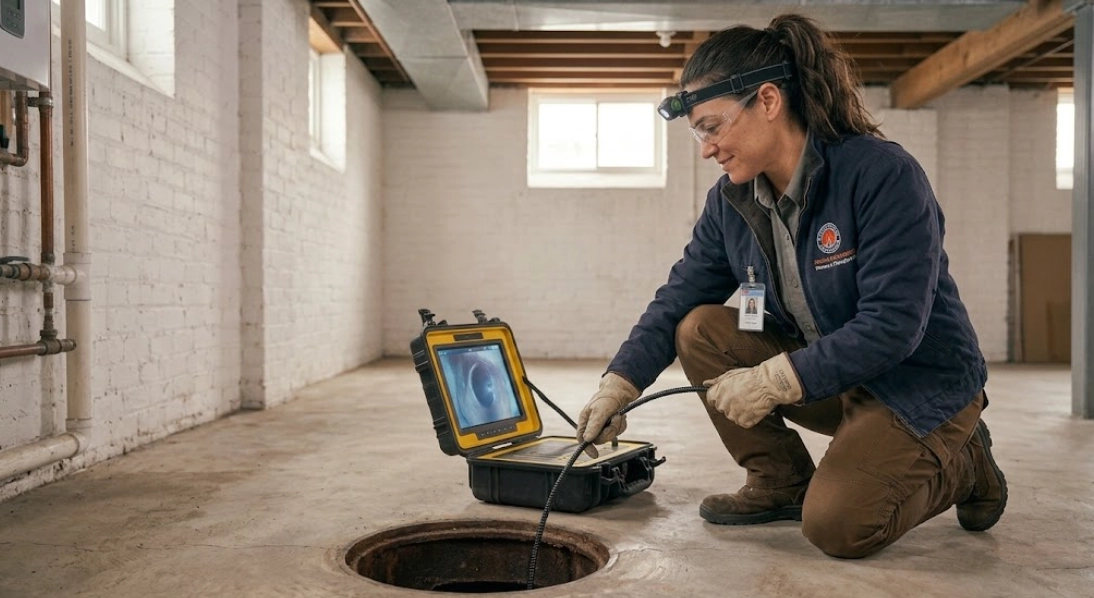
Guessing what lies four to ten feet beneath a concrete sidewalk or roadway is costly and inefficient. We utilize advanced fiber-optic sewer inspection cameras to view the internal condition of your lateral in real time, pinpointing the depth, distance, and exact nature of the failure. Whether you need heavy root clearing, a damaged house trap replaced, or an excavated sewer line repair, we guide you through practical solutions. When indoor backups threaten mechanical spaces, we also coordinate with our team to safeguard your boiler room through dedicated boiler repair in Prospect Lefferts Gardens.
Warning Signs of Main Sewer Line Failure
A failing sewer line displays severe building-wide symptoms that demand immediate professional evaluation:
Simultaneous Multi-Fixture Backups
When flushing an upper-floor toilet causes wastewater to surge into a ground-floor bathtub or basement utility sink, the building's main sewer exit is completely obstructed.
Recurrent Root Blockages
If a plumber cleared your line with a snake only for the drain to stop up again 6 to 12 weeks later, active tree root intrusion is re-growing across cracked pipe joints.
Sunken Pavers or Sidewalk Depression
A collapsed or fractured underground sewer pipe washes away surrounding soil and bedding gravel, causing localized sidewalk slabs, front yard flagstones, or areaway tiles to sink noticeably.
Pervasive Sewer Gas in the Basement
Strong methane and sewer gas odors in the cellar indicate a blown cleanout plug on the main house trap, cracked cast-iron vent piping, or a dry running trap seal.
Experiencing Chronic Sewer Backups or Gurgling?
Do not let raw sewage compromise your property's basement. Speak directly with a licensed plumbing specialist to schedule a video camera inspection.
The Diagnostic Power of High-Definition Sewer Camera Inspections
Our sewer camera inspections eliminate guesswork before undertaking costly excavation or repairs:
Self-Leveling Color Video Sensor
Our cameras feature high-intensity LED arrays and self-leveling heads that keep the picture upright as the probe travels through dark piping. We inspect every inch of the pipe wall for longitudinal fractures, offset joints, heavy grease deposits, and structural bellies.
Digital Footage Counter
The push-rod system measures the exact distance in feet and inches from the basement cleanout to the defect. This precision allows us to know whether an issue is located under the basement slab, beneath the front garden, under the sidewalk, or out in the street roadway.
Electromagnetic 512 Hz Sonde Locating
The camera head houses a radio-frequency transmitter (sonde). Above ground, the technician uses a handheld locator wand to pinpoint the camera's exact physical position and depth beneath the concrete surface, marking the precise excavation spot.
Understanding NYC DEP Sewer Lateral Ownership & Responsibilities
Property owners in New York City often have questions regarding municipal responsibility versus private ownership. The guide below outlines jurisdiction:
| Sewer Segment | Responsible Party | Regulatory & Technical Scope |
|---|---|---|
| Basement Main Drain & House Trap | Property Owner | Piping inside the building envelope to the foundation wall, including dual brass cleanouts and fresh-air intake vents. |
| Front Areaway to Property Line | Property Owner | Sub-grade pipe beneath the front courtyard or garden wall up to the official sidewalk boundary. |
| Sidewalk to Curb Line | Property Owner | Pipe beneath the concrete municipal sidewalk. Excavation requires NYC DOT sidewalk opening permits. |
| Street Lateral (Curb to Main) | Property Owner | Under NYC DEP regulations, the private lateral connection extending through the street to the city main belongs to the owner. |
| Public Sewer Main in Street | NYC DEP (City of New York) | The central trunk sewer running down the center of the street roadway, maintained by municipal DEP crews. |
Evaluating Sewer Spot Repairs vs. Full Line Replacement
Deciding between a localized spot repair and a full sewer lateral replacement requires evaluating camera findings carefully:
Localized Spot Repair
If the video inspection shows that 90% of the pipe is structurally sound and the failure is isolated to a single broken cleanout, a cracked house trap, or a single localized joint fractured by a tree root, opening a targeted pit to replace that specific fitting is cost-effective and minimally disruptive.
Full Sewer Lateral Replacement
When vitrified clay pipe has collapsed in multiple locations, exhibits severe back-pitch (bellies) where sewage stagnates, or is brittle and crumbling throughout, repeated spot repairs become wasteful. A full replacement using heavy-duty extra-heavy cast-iron pipe with DOT roadway permits restores lifetime reliability.
Interconnected Plumbing & Heating Services
Sewer lines interact with other critical plumbing and heating infrastructure in your home. Learn about our related services across Prospect Lefferts Gardens:
Drain Cleaning & Mechanical Snaking
Clear interior secondary branches, kitchen sinks, and bathtub wastes before heavy buildup can travel into your building's primary house trap.
Concealed Leak Detection
Locate hidden slab leaks, weeping waste stacks, and pressurized supply lines using non-invasive acoustic and thermal imaging equipment.
Boiler Room Safety & Diagnostics
Protect heating boilers and domestic hot water equipment from sewage backflow hazards during severe basement plumbing emergencies.
Frequently Asked Questions About Sewer Line Repair
How does high-definition sewer camera inspection work?
A self-leveling color video camera mounted on a rigid push-rod cable is inserted through your building's basement sewer cleanout or house trap. The camera transmits real-time high-resolution video to a field monitor, recording the exact interior condition of the lateral pipe, measuring distance from the building foundation, and pinpointing tree root masses, cracked clay tiles, belly sagging, or offset pipe joints.
Where does property owner responsibility end for sewer lines in New York City?
Under New York City Department of Environmental Protection (DEP) regulations, property owners are legally responsible for the entire length of the private sewer lateral line—from the building foundation, under the sidewalk, and across the street all the way to its physical connection at the municipal sewer main in the middle of the roadway.
Can tree roots inside a sewer pipe be permanently repaired without replacing the pipe?
Mechanical root cutting with heavy cable blades clears roots temporarily to restore immediate flow. However, because roots enter through cracked joints or fractured clay pipe hubs seeking water, they will continually grow back unless the damaged pipe section is physically replaced or sealed.
What is a Brooklyn 'house trap' and why does it need maintenance?
A house trap (running trap) is a large U-shaped cast-iron fitting installed in the basement floor where the main building drain exits toward the street. It maintains a water seal that prevents toxic municipal sewer gases and pests from entering the building. Vintage house traps often have seized brass cleanout plugs that corrode or blow out under backpressure, requiring professional repair.
Schedule a Sewer Inspection in Prospect Lefferts Gardens
Get definitive answers regarding your main sewer line with an on-site video camera survey. Call NY Plumbing today to speak directly with an underground plumbing specialist.