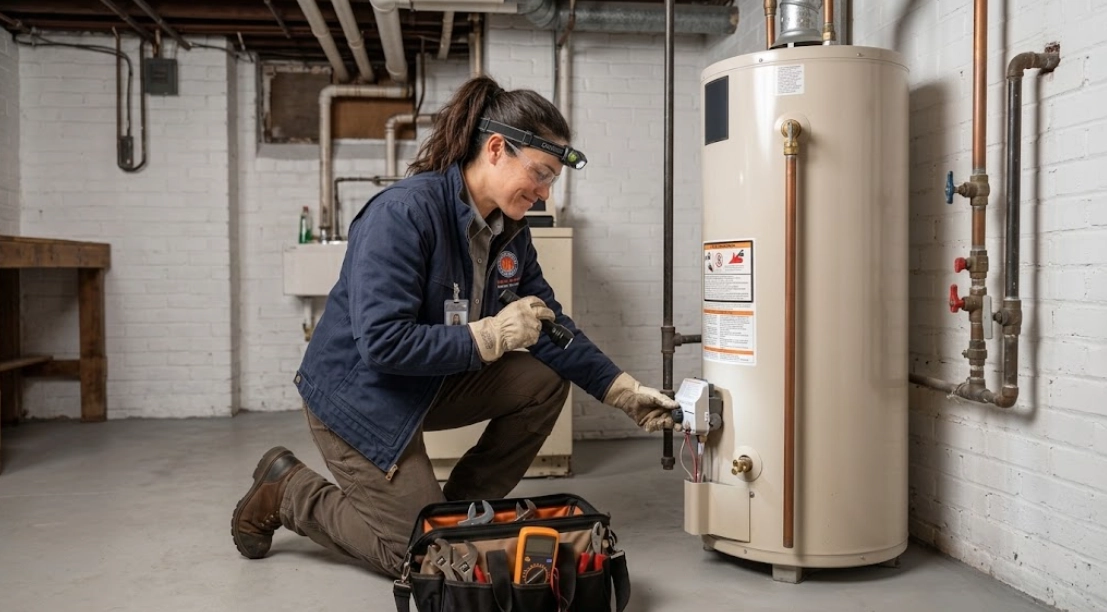
Reliable Domestic Hot Water for Prospect Lefferts Gardens, Brooklyn
Waking up to an ice-cold shower or discovering a pool of rusty water creeping across your basement floor brings everyday routines to a sudden halt. In the historic residential buildings of Prospect Lefferts Gardens—from single-family limestone townhomes to multi-family brownstones and pre-war apartment buildings—domestic hot water systems are pushed to their limits year-round. Unlike space heating, which rests during warmer months, your water heater works constantly every single day.
Water heating setups in Brooklyn properties vary considerably depending on building layout and plumbing history. While many residences rely on standalone atmospheric natural gas water heaters, others utilize high-capacity electric units, tankless units, or indirect storage tanks tied directly to the central space-heating boiler. Each system configuration has distinct operational demands, electrical controls, and safety mechanisms.
When hot water disappears, making an accurate diagnosis quickly is essential. Our technicians isolate whether the breakdown stems from a failed pilot flame, a shorted electric element, heavy mineral sedimentation, or an issue within the central heating boiler itself. If the failure involves your central heating equipment, we provide coordinated boiler repair in Prospect Lefferts Gardens to restore both heat and hot water simultaneously.
Warning Signs Your Water Heater Needs Professional Attention
Water heaters rarely fail without warning. Watch for these common mechanical symptoms before experiencing a total loss of hot water or sudden basement flooding:
Total Loss of Hot Water
When water turns completely cold, gas units frequently suffer from an extinguished pilot light, soot-clogged burner orifice, or a worn thermocouple that cuts off the safety valve. Electric units often have a tripped high-temperature reset button or burned-out heating elements.
Inadequate or Lukewarm Water
If hot water runs out within minutes, a cracked or broken dip tube inside the tank may be dumping incoming cold water directly onto the top hot-water outlet. In electric systems, a failed lower element leaves only the upper third of the tank heated.
Moisture Pooling Around the Tank Base
Dripping water can originate from faulty copper fittings, a leaking drain valve, or an overpressurized temperature and pressure (T&P) safety relief valve. However, water weeping through outer jacket seams indicates internal tank failure.
Popping, Rumbling, or Kettle Sounds
Loud popping noises indicate heavy mineral and scale buildup baking onto the tank bottom. Steam bubbles struggle to escape through the sediment layer, overheating the metal tank bottom and causing accelerated corrosion.
Lost Hot Water in Prospect Lefferts Gardens?
Do not settle for cold showers or risk basement water damage. Talk directly with a local plumbing technician to diagnose your water heater issue promptly.
Diagnosing Gas, Electric, and Boiler-Connected Water Heaters
Different water heater designs require tailored diagnostic methods and safety protocols:
Gas-Fired Water Heaters
Natural gas units require inspecting the pilot assembly, thermocouple or thermopile millivolt output, gas control valve, and draft hood venting. If gas supply piping or shutoff valves are corroded or leaking, our technicians coordinate licensed gas line repair and testing to ensure absolute safety.
Electric Water Heaters
Electric water heaters utilize dual thermostats and submerged heating elements. Diagnosing electrical faults requires testing continuity, element resistance, and voltage supply with calibrated meters, alongside inspecting upper high-limit safety cutoffs.
Indirect Water Heaters (Boiler Coils)
Common in Brooklyn townhouses, indirect tanks use hot water circulated from the main hydronic boiler through an internal heat exchanger coil. When hot water fails in an indirect system, the fault is frequently traced to an aquastat failure, circulator pump failure, or zone valve malfunction rather than the tank itself.
Repair vs. Replacement: Making a Cost-Effective Decision
Understanding when a water heater can be repaired versus when replacement is necessary prevents wasteful spending on obsolete equipment:
| Component / Condition | Sensible Resolution | Technical Rationale |
|---|---|---|
| Leaking Internal Tank Body | Replacement Required | The glass inner lining has cracked and the steel tank wall has corroded through. Internal tank leaks cannot be patched or welded safely. |
| Defective Thermocouple or Pilot Assembly | Repair Recommended | Inexpensive safety components can be swapped quickly, restoring reliable gas ignition. |
| Discharging Temperature & Pressure (T&P) Valve | Repair / Valve Swap | Indicates excessive thermal expansion or a worn internal spring. Replacing the valve and inspecting expansion tanks fixes the issue. |
| Burned-Out Electric Element or Thermostat | Repair Recommended | Submerged heating elements can be drained, removed, and replaced with high-watt-density elements easily. |
| Severe Corrosion on Tank Over 10–12 Years Old | Replacement Advised | Standard storage tanks have a design lifespan of 8 to 12 years in NYC water conditions. Compounding component failures signal imminent tank rupture. |
Practical Water Heater Maintenance for Brooklyn Buildings
Prolong the operating life of your water heater and maintain hot water efficiency with these practical precautions:
- Annual Tank Flushing: Draining a few gallons from the bottom drain valve once or twice a year removes loose mineral sediment before it bakes into rock-hard scale on the bottom head.
- Inspect the Sacrificial Anode Rod: The magnesium or aluminum anode rod sacrifices itself to protect the steel tank from corrosion. Checking and replacing the rod every 3 to 5 years dramatically extends tank life.
- Keep Combustible Materials Clear: Never store paint cans, cardboard boxes, or cleaning supplies near the base of a gas water heater. Vapors can ignite, and blocked combustion air leads to toxic carbon monoxide generation.
- Check for Hidden Plumbing Leaks: If your hot water runs out rapidly and you hear water running continuously, a concealed slab leak or broken hot-water riser may be draining your hot water supply. Non-invasive leak detection isolates hidden plumbing breaks without needless wall damage.
Interconnected Plumbing & Heating Services
Water heaters operate alongside other essential plumbing systems in your home. Explore our related services across Prospect Lefferts Gardens:
Boiler Repair & Diagnostics
Restore heat and domestic hot water coils with precision boiler burner tuning, circulator troubleshooting, and steam and hydronic system service.
Boiler Replacement & Upgrades
Upgrade aging heating infrastructure with high-efficiency boiler installations designed to integrate seamlessly with high-capacity indirect water heaters.
Gas Line Repair & Inspection
Verify gas supply piping safety, appliance shutoff valves, and code compliance for gas water heaters, boilers, and cooking appliances.
Frequently Asked Questions About Water Heater Repair
Why do I have no hot water in my Prospect Lefferts Gardens home?
In gas-fired water heaters, common causes include an unlit pilot light, a dirty or failed thermocouple, an extinguished electronic spark igniter, or a tripped gas control valve. In electric units, failed upper or lower heating elements or a tripped high-limit reset switch are typical. If your hot water is produced via an indirect tank or tankless coil attached to your boiler, the boiler's aquastat or zone circulator may be malfunctioning.
When can a leaking water heater be repaired versus replaced?
If water is leaking from pipe fittings, the cold inlet shutoff valve, the temperature and pressure (T&P) relief valve, or an electric element gasket, these components can usually be repaired or replaced. However, if water is weeping or leaking directly from the bottom seam of the internal glass-lined storage tank, the steel jacket has corroded through, and complete tank replacement is necessary.
What is an indirect water heater and how does it connect to my boiler?
An indirect water heater is a well-insulated storage tank that uses hot water heated by your home's central boiler to heat domestic potable water through an internal heat exchanger coil. They are exceptionally durable, highly efficient, and common in Brooklyn brownstones with hydronic heating boilers.
Why is my water heater making popping or rumbling sounds?
Rumbling or popping sounds are caused by thick mineral and sediment accumulation settling at the bottom of the tank. Water becomes trapped beneath the sediment layer; as the gas burner fires, the trapped water boils into steam bubbles that pop violently through the sediment blanket. Flushing and descaling the tank helps relieve this strain.
Schedule Water Heater Service in Prospect Lefferts Gardens
Restore reliable hot water to your Brooklyn home or apartment building today. Speak directly with our plumbing technicians to discuss symptoms and arrange a visit.